[ad_1]
university students complete xBAMBOO Cabin in china
Architecture students of Soochow University in Suzhou, China, complete the XBAMBOO Cabin, made out of raw bamboo and timber, a serene retreat inside the Dushuhu Campus. The 6-square-meter pavilion functions as a teahouse and meditation space, offering a tranquil environment framed by a lush bamboo forest. The project fosters hands-on learning in computational design, advanced fabrication, and real-world construction.
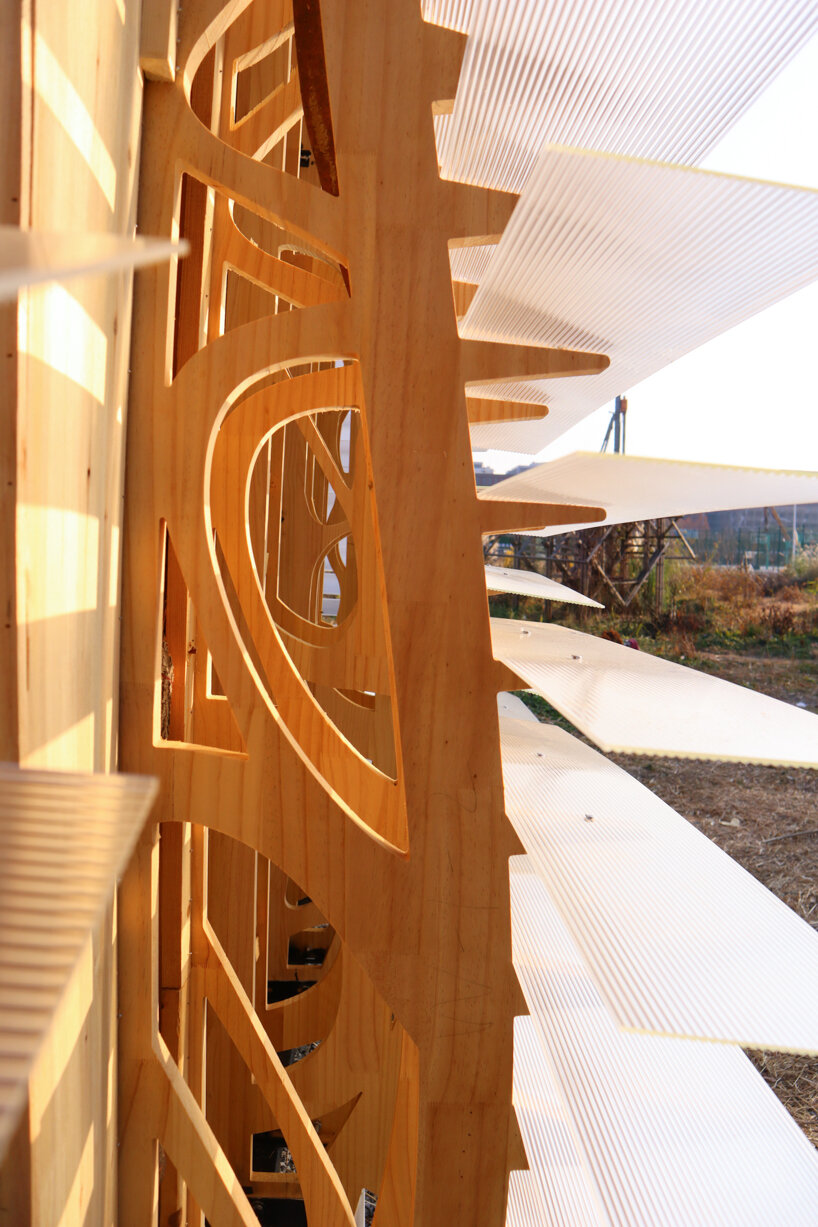
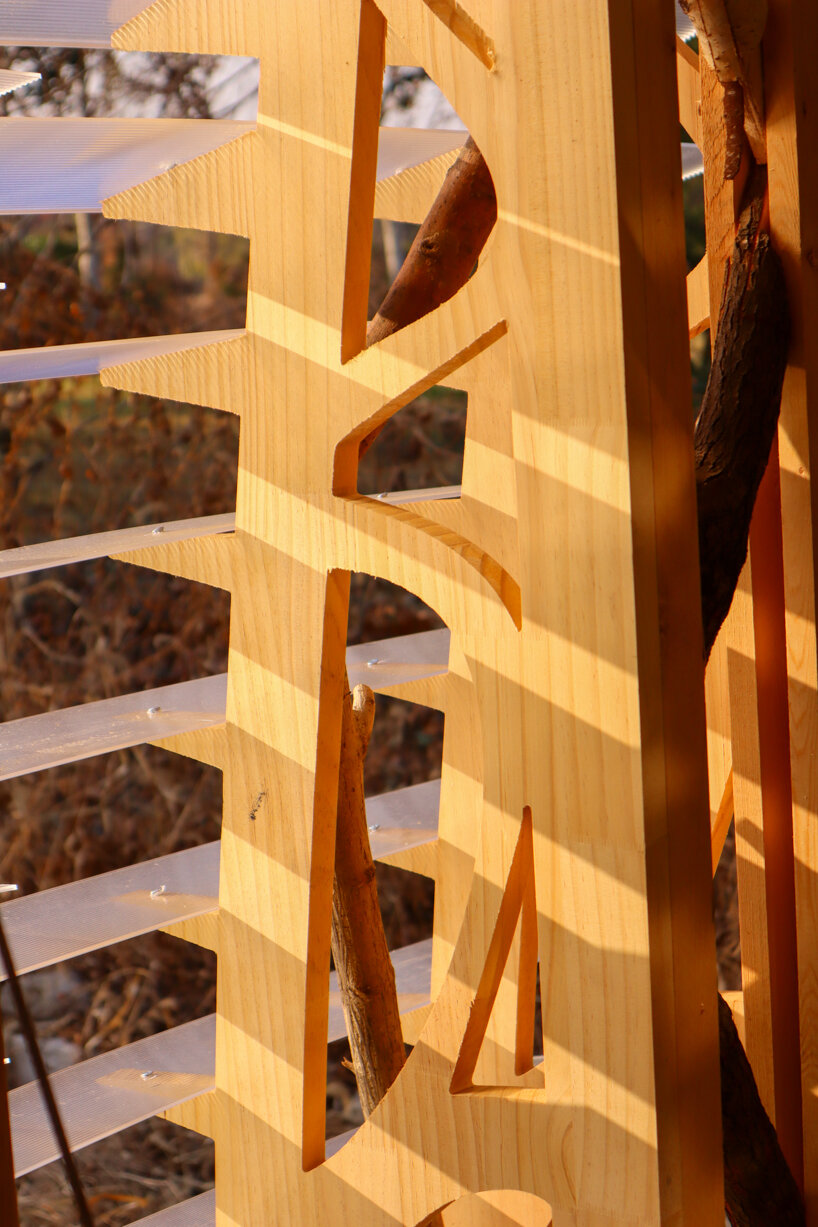
The outer shell of the cabin is made from acrylic panels and precisely cut wooden keels, improving airflow while letting in soft light. The shape of the keel frame was optimized using AI, more specifically, GAN algorithms, to keep the structure lightweight and efficient. Assembling the frame with tree branches and bamboo poles adds an organic touch, creating a layered, textured effect. Thoughtful openings bring the space to life—a welcoming front door connects to the main road, while a big bay window on the south side frames the bamboo forest.
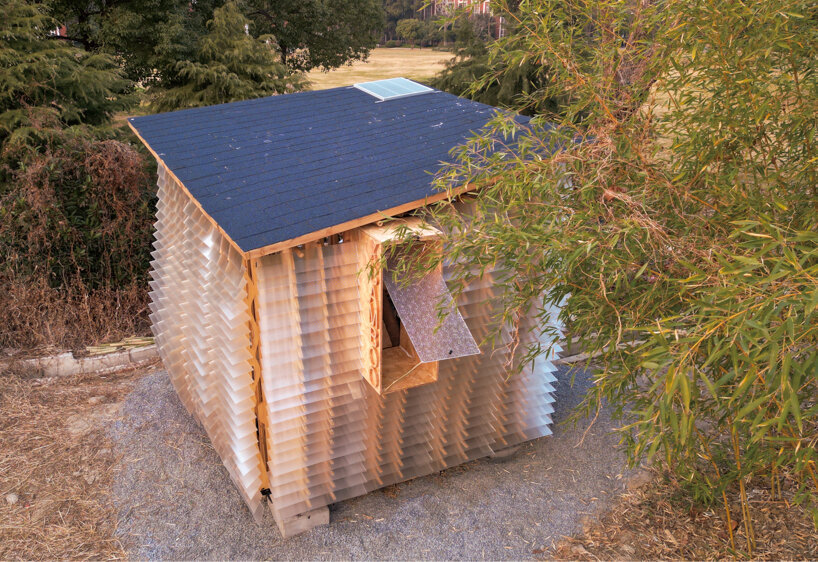
bird’s eye view of the cabin | image courtesy of Soochow University School of Architecture
Fusion of Traditional Timber Techniques and Robotic Fabrication
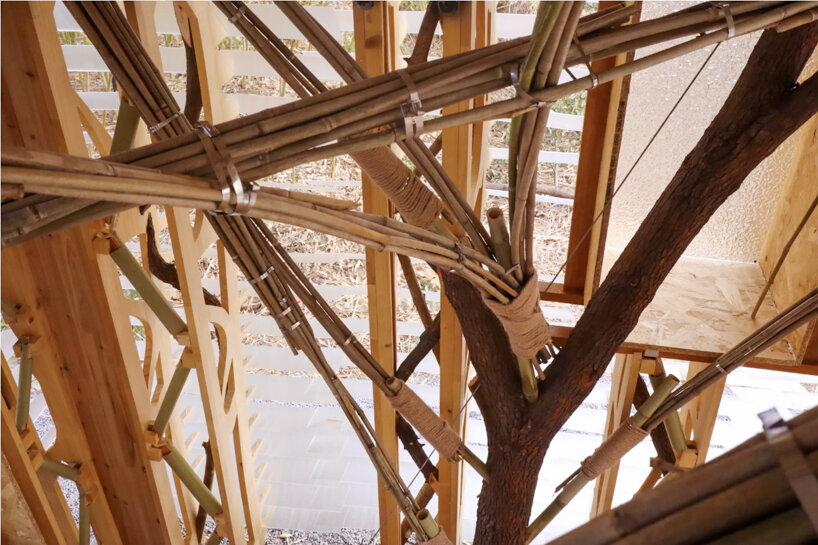
The students at Soochow University School of Architecture explore a hybrid structural approach through XBAMBOO Cabin, inspired by historical timber constructions and contemporary robotic-fabricated architecture. The design-to-build process combines point cloud scans of raw materials, parametric structural optimization, GAN-based design, robotic craftsmanship, in-situ 3D printing, and customized bamboo-timber joints. Locally sourced materials play a key role, with tree trunks and branches forming the structural columns and curtain wall truss bracings, while bamboo arches, harvested from the campus garden, create organic lines.
To fully utilize the irregular forms of natural materials, the collected tree trunks and branches were 3D-scanned, digitally modeled, and robotically crafted for precise connections. Structural arches incorporate bundled thin bamboo poles combined with Moso bamboo segments, a species commonly used in construction. Two distinct jointing techniques enable the assembly. The ‘plug-in’ joints, where Moso segments are inserted into prefabricated slots and secured with bamboo sticks, and the ‘add-on’ joints, where thick bamboo poles rest on custom footings 3D-printed onto tree trunks. The cabin sits atop a steel frame with four concrete foundations, allowing for minimal environmental impact.
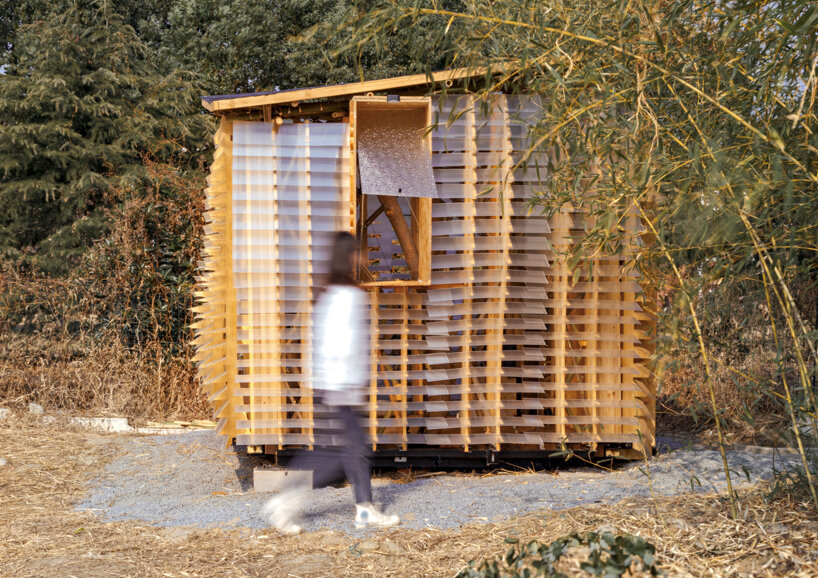
structural arches made from thin bamboo poles
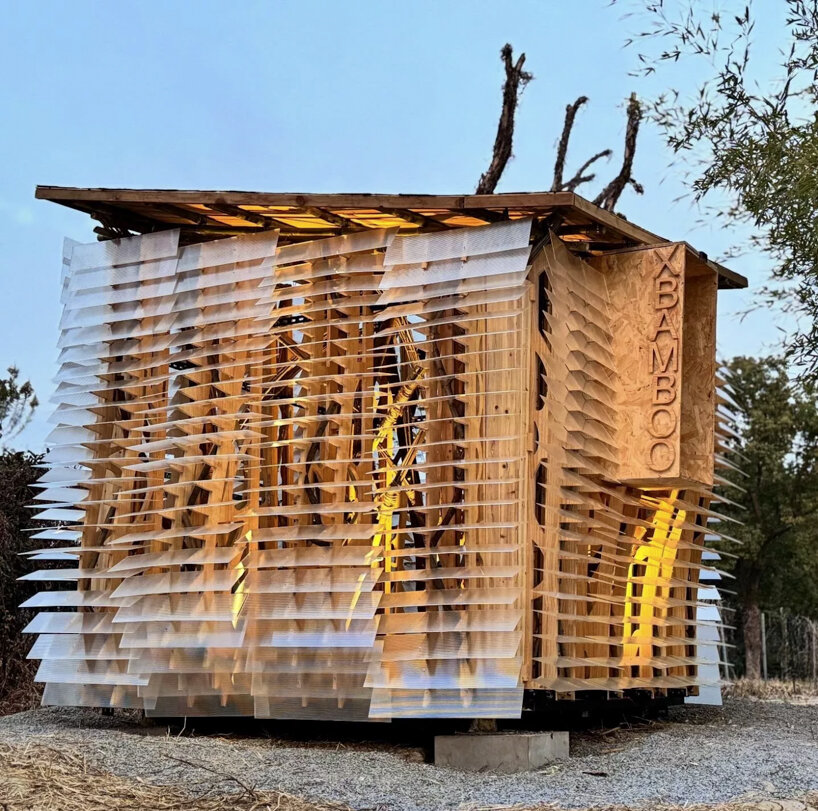
solar panels on the roof power lights inside the cabin
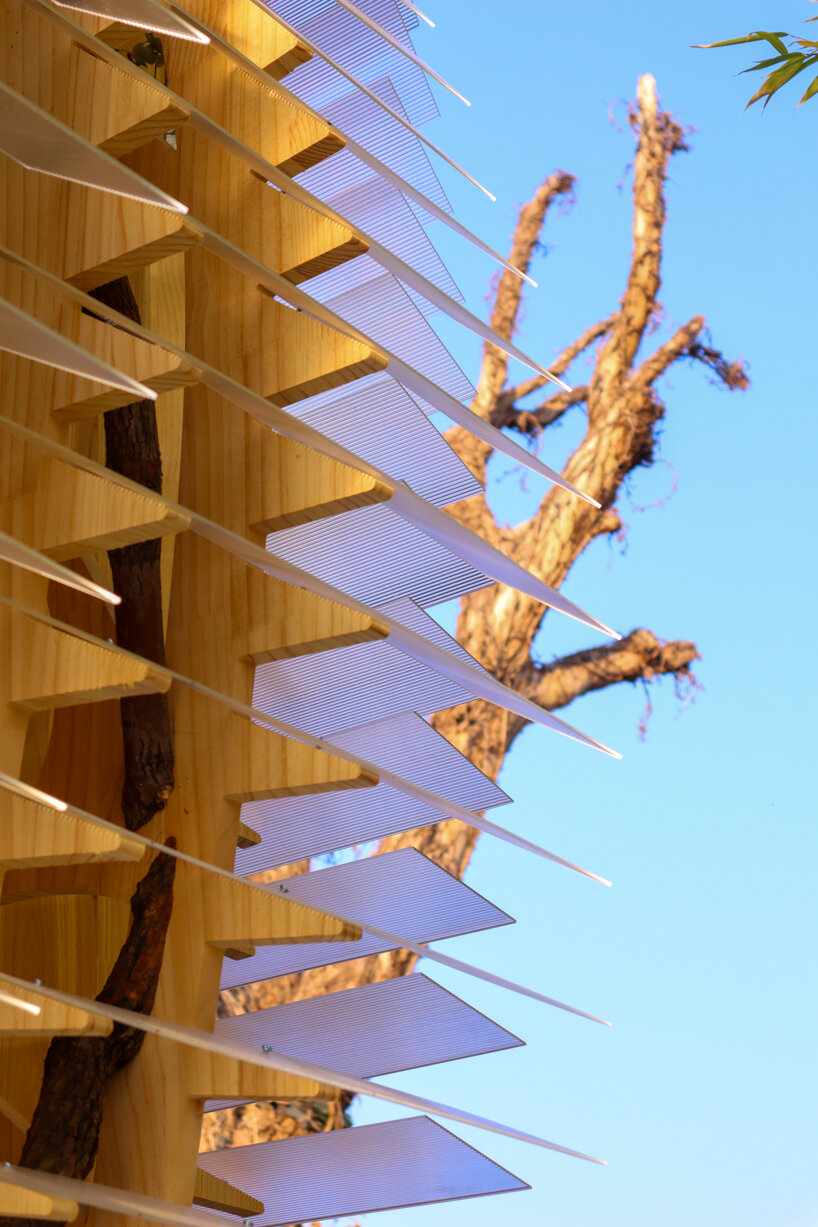
the outer shell of the cabin is made from acrylic panels and precisely cut wooden keels
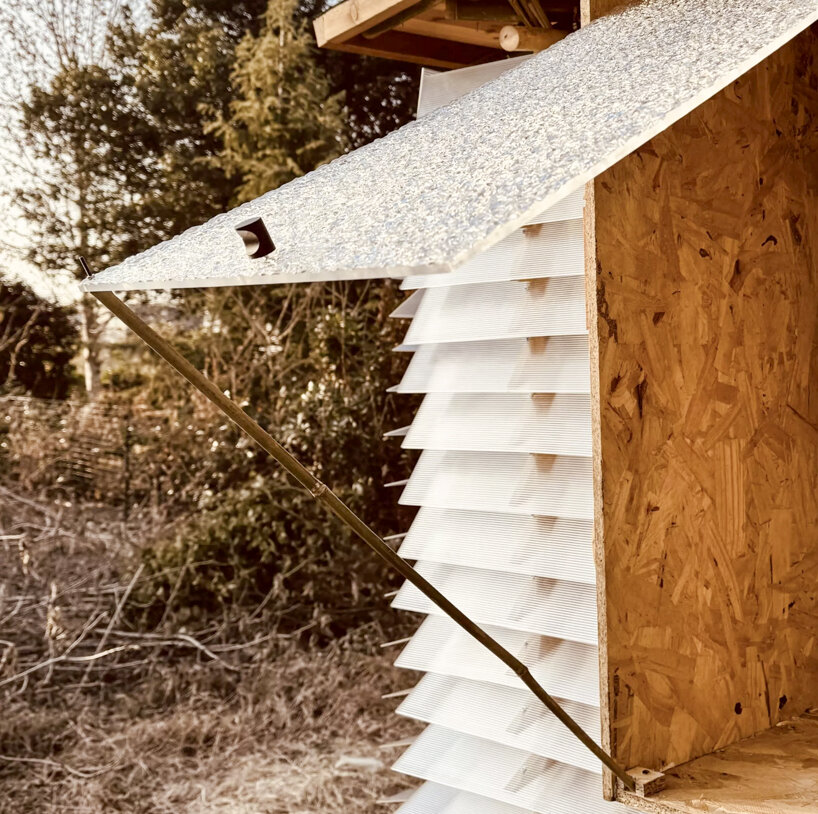
windows on the south facade
plug-in timber-bamboo joint
bamboo arches and pruned tree components compose the curtain wall truss bracings
sunlight shines into the cabin through the parametric facade
[ad_2]
Source link