Zupagrafika unveils a visual journey of brutalist architecture
Independent publishing duo Zupagrafika, David Navarro and Martyna Sobecka, return with Eastern Blocks II: Concrete Landscapes of the Former Eastern Bloc, a compelling continuation of their acclaimed visual journey through the socialist-era concrete suburbs of Central and Eastern Europe. This second volume captures the monolithic charm and quiet endurance of modernist and brutalist architecture across ten cities — from Chișinău and Kaliningrad to Tbilisi and Vilnius. Featuring over 180 photographs and a foreword by architectural historian Kateryna Malaia, the book presents an intimate and panoramic survey of the prefabricated urban landscapes that still house millions today.
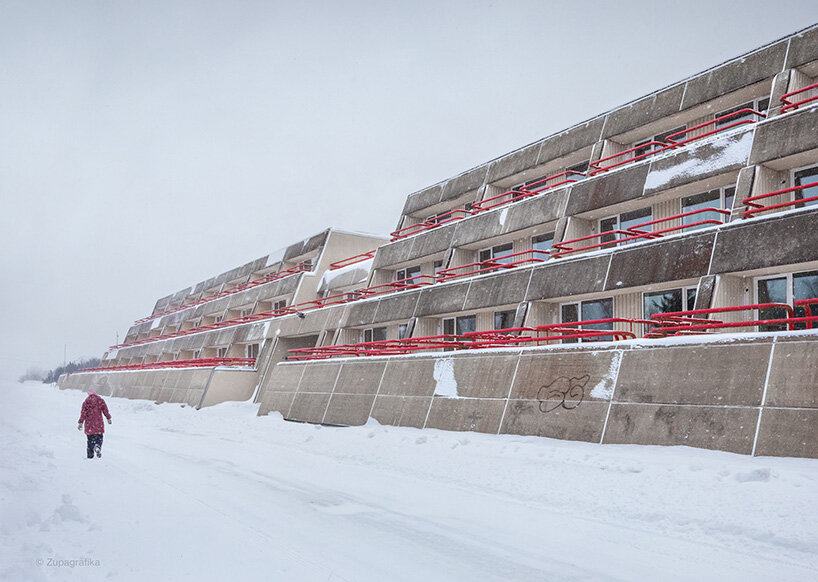
former Hotel Sport in the Pirita District of Tallinn, Estonia | image by David Navarro & Martyna Sobecka all images ©Zupagrafika
Eastern Blocks II explores ten different cities in ten chapters
Where the first Eastern Blocks volume offered a panoramic view of post-war socialist architecture, Eastern Blocks II zooms in with greater depth, exploring local variations in design, construction, and context. The book is divided into ten chapters, each dedicated to a different city, with images captured by Zupagrafika studio’s duo, Navarro and Sobecka, alongside regional contributions by photographers Alexander Veryovkin and Kseniya Lokotko. From the panelák housing estates of Prague to the geometric high-rises of Minsk, the series highlights how a common architectural language of repetition was transformed by geography, politics, and local culture.
Kateryna Malaia’s foreword dismantles the notion that prefabricated concrete construction was a uniquely Soviet endeavor. As she explains, serial housing typologies were globally embraced — from interwar Poland to post-war Chicago — and were reimagined across the Eastern Bloc with surprising variation. Local design institutions and zonal scientific institutes (like Kyiv’s ZDNIEP) played a central role in adapting standardized systems to regional needs, shaping distinct yet connected urban identities from Riga to Sofia.
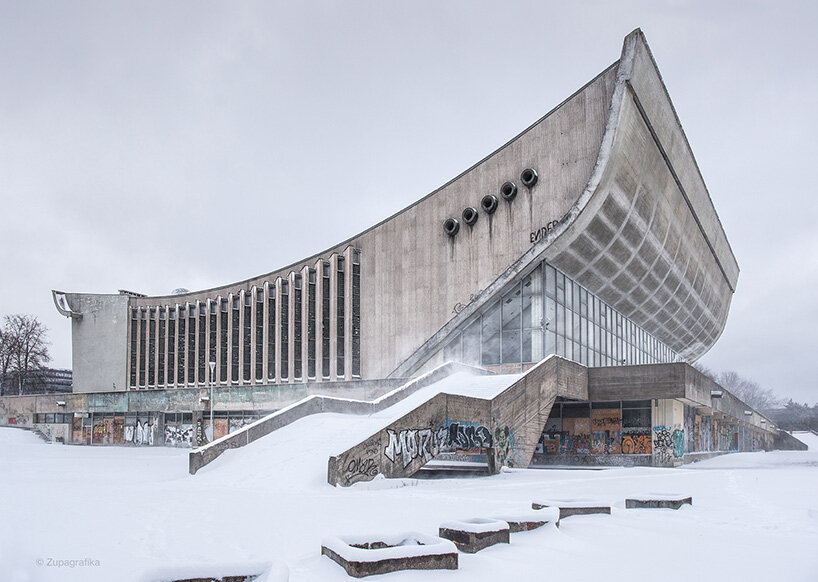
Vilnius Palace of Concerts and Sports ‘Sporto Rūmai,’ Lithuania | image by David Navarro & Martyna Sobecka
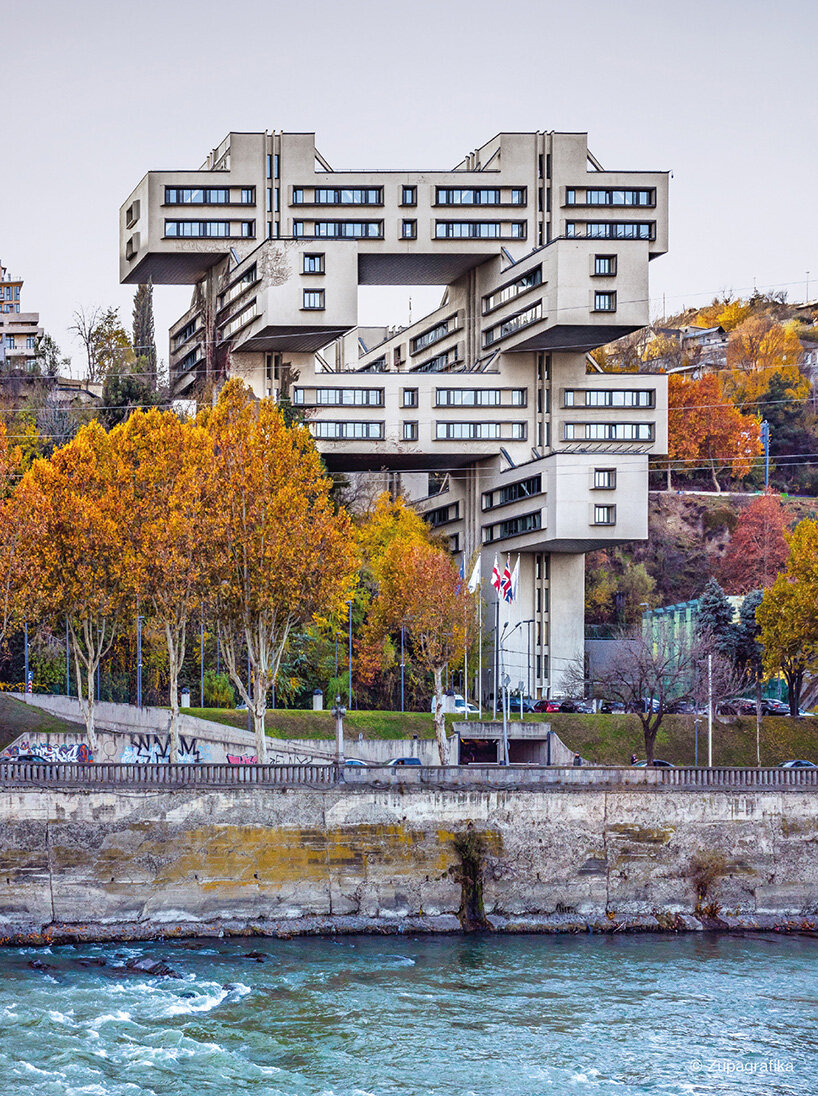
The Bank of Georgia (Former Ministry of Highway Construction) in Gagarin kucha. Listed ascultural heritage in 2006 | image by David Navarro & Martyna Sobecka
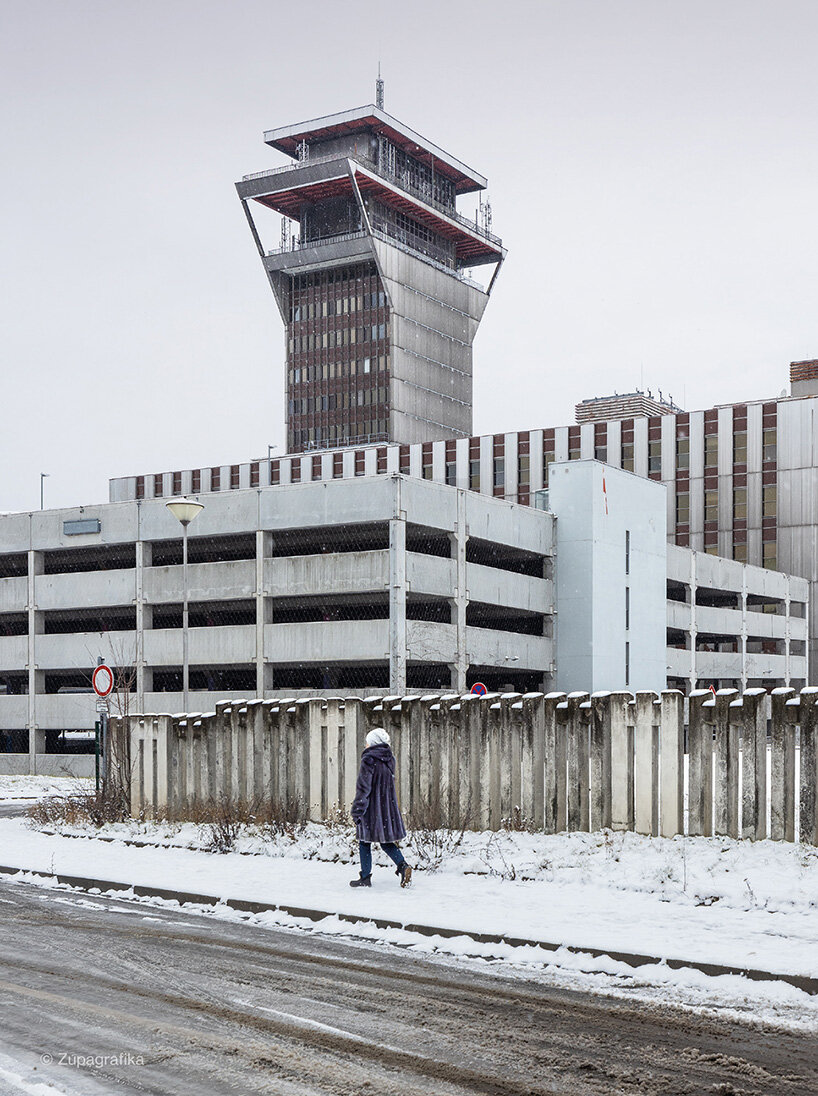
recently demolished Central Telecommunications headquarters in Prague, Czech Republic | image by David Navarro & Martyna Sobecka
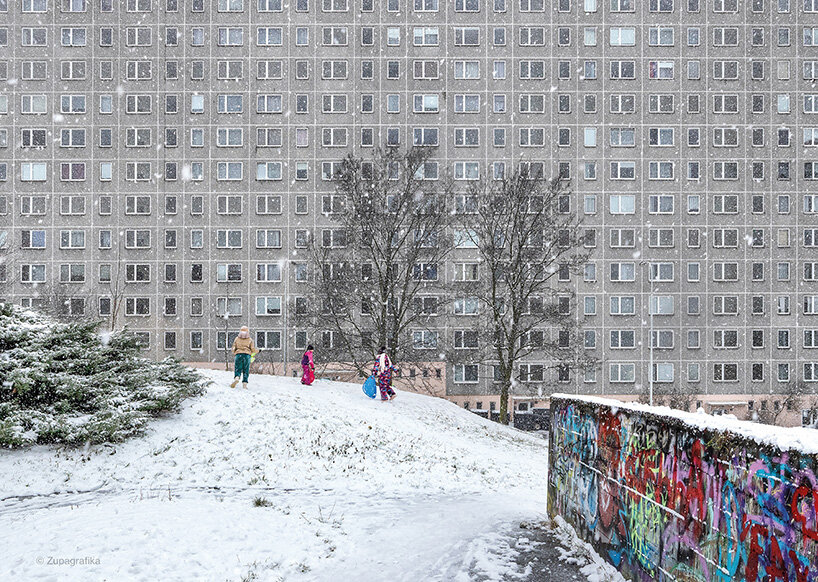
Larsen-Nielsen type prefab panel block (panelák) in Prague, Czech Republic | image by David Navarro & Martyna Sobecka