Basalt, Earth, and Timber compose Pali House in Maharashtra
Located on the edge of the Deccan Plateau in Maharashtra, India, the Pali House is a farmhouse designed as a consolidated volume integrating multipurpose spaces and a single attached bedroom. Developed by Metis Practice, the plan facilitates communal use and supports agricultural activities on site. The building is positioned within a chickoo grove, with a roof rising above the tree canopy. This orientation enables the structure to receive indirect northern light and respond to regional climatic conditions marked by high temperatures and seasonal rainfall. The central bay is framed by a deep north-facing veranda and a narrower south-side veranda that encloses a courtyard with a water feature, promoting cross ventilation and passive cooling.
The project was constructed with local materials by specialized craftspeople from different regions of India. The structural system includes a basalt foundation and plinth transitioning into a combination of basalt stone and rammed earth walls. A wooden framework is anchored onto these elements to form habitable spaces, integrating materials such as wooden decking, copper roof tiles, and wooden shingles. The architectural language maintains a low environmental impact and supports sustainable building principles. The material strategy emphasizes regional geology and vernacular construction methods.
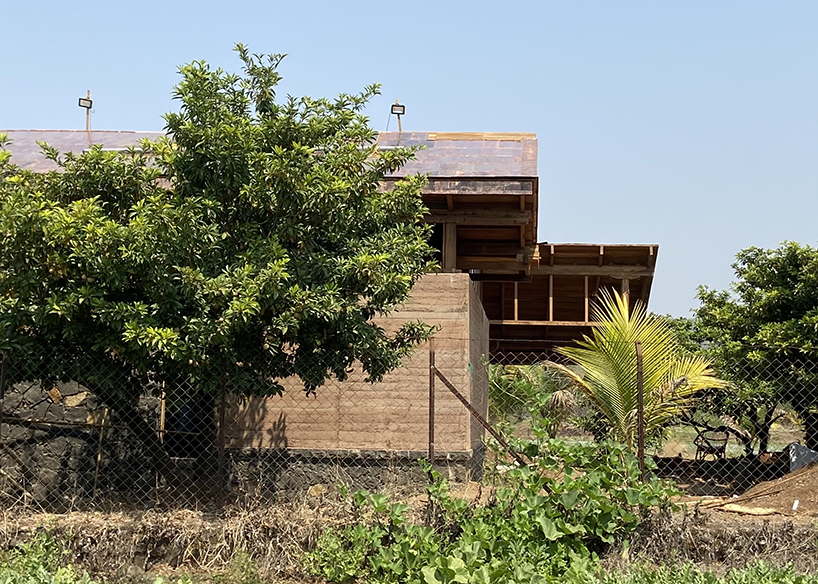
The Farm House sitting on the edge within a grove of chickoo trees is bounded by rammed walls at both ends. The copper roof lifts up towards the field to the north.
Metis Practice’s design responds to environmental conditions
The northern veranda serves multifunctional purposes related to farming and living. Its basalt stone flooring has a river-wash texture with a satin finish, extending into internal surfaces. The veranda roof is clad with wooden shingles and connects to the main copper-tiled roof. Clerestory windows and glass panels within the wooden frame admit indirect daylight, improving interior illumination and reducing heat gain. The primary pitched roof, oriented toward the south and southwest, intercepts the prevailing monsoon and directs breezes through the courtyard. Marble and glass infills within the wood structure offer varied lighting and privacy levels. The copper roof provides protection and shading. The central courtyard improves airflow, while the recessed waterbody beneath collects rainwater and facilitates evaporative cooling. During the monsoon, rainwater is channeled from the courtyard into this reservoir.
Basalt was sourced from road construction activities in the Deccan Traps and used for the foundation, plinth, and walls. The material’s density and availability support its use in structural and thermal applications. Soil excavated for the foundation was filtered and stabilized with lime and cement. Red oxide pigment was added before compacting it into formwork. Several prototypes were tested to refine the final mix. The resulting thick walls offer high thermal mass. Anjili wood, obtained from trees felled during road widening, was used for the superstructure, columns, beams, roof shingles, and internal framing. The roof is constructed using hand-formed 22-gauge copper tiles laid over wooden decking. Fastened with copper clips and stainless-steel screws, the copper finish is lightweight, corrosion-resistant, and develops a self-protecting patina. It also provides fire and lightning resistance.
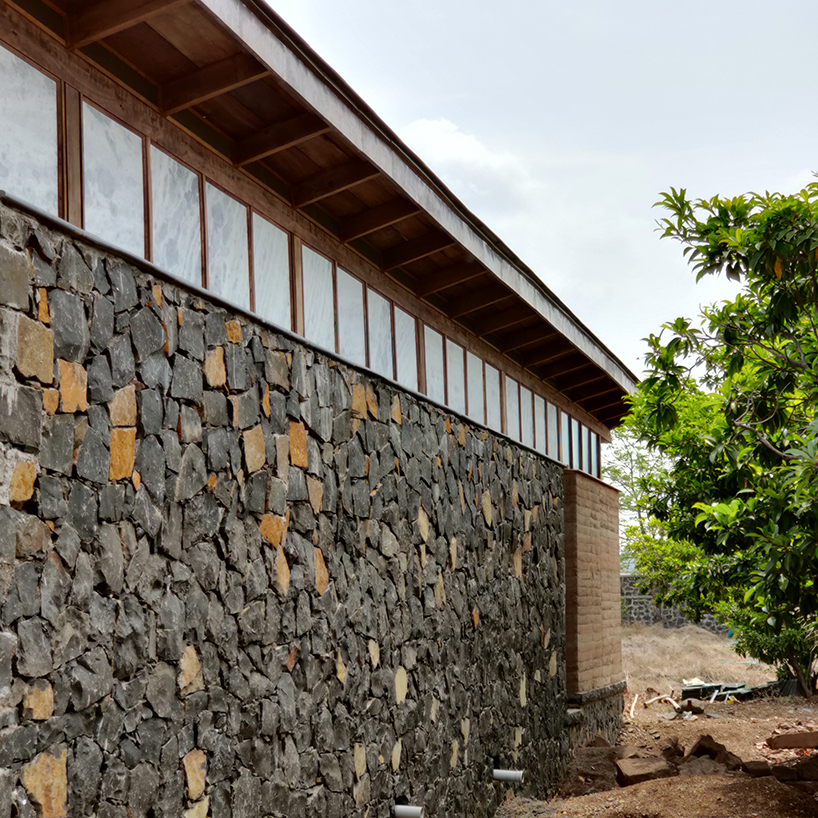
The rear Southern face of the house is solid and built with local Basalt stone and Rammed Earth. This thermal mass cools the house and buffers against intense heat. Infill panels of marble, filter the
Artisans from the Beed district, known for heritage stonecraft, executed the basalt work, including foundations, walls, and column bases. Bengali Muslim masons were responsible for preparing and assembling the stabilized earth walls. Craftsmen from Kerala, traditionally involved in temple construction, fabricated the wooden structure using interlocking joinery. All components were pre-assembled offsite and installed onsite within 10 days. The same team produced and installed the copper roof, including detailing for joints and terminations.
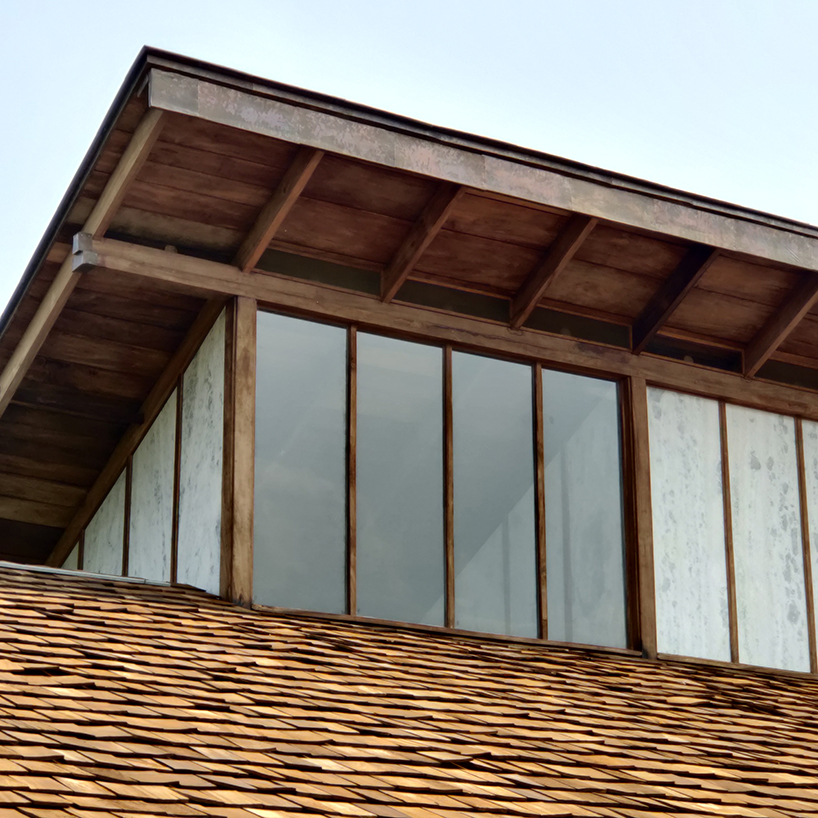
The intersection of the veranda and the main central block. Roofing made of Wooden shingles and copper differentiate the two and the main roof lifts up bringing the north light within. Marble is used
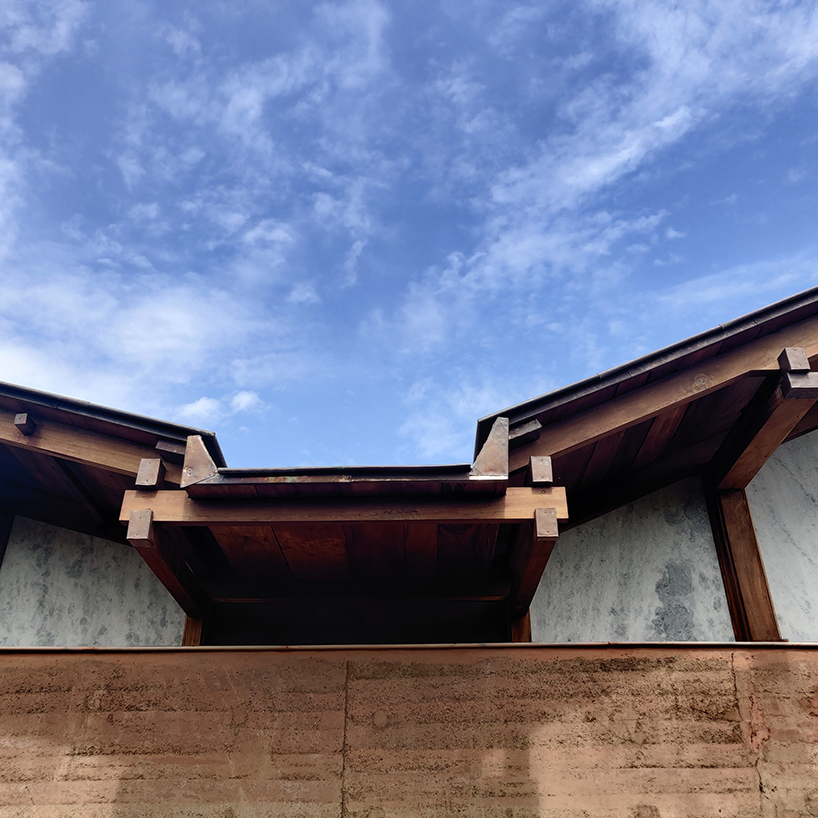
The copper lined gargoyle that directs part of the water from the main roof out on both ends.
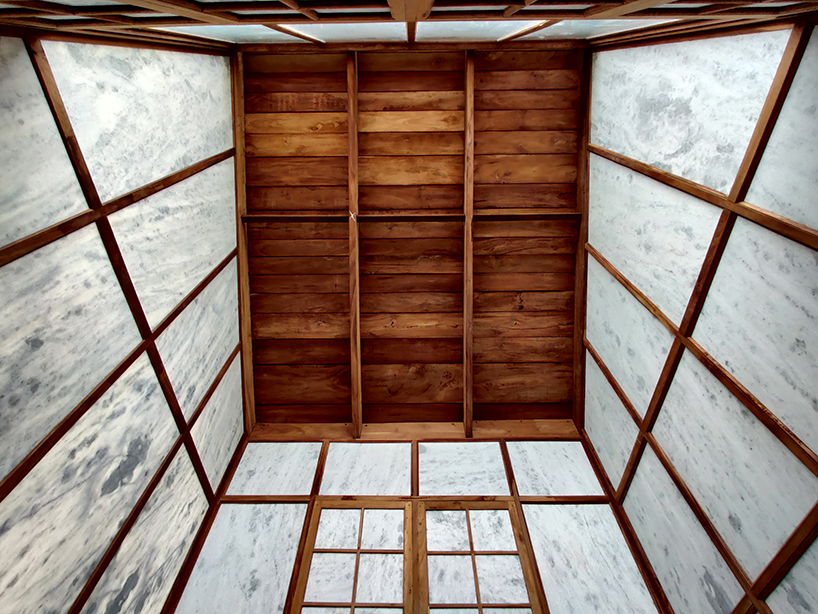
Marble lined clerestory with the glass north light bringing natural light into the vertical volume.
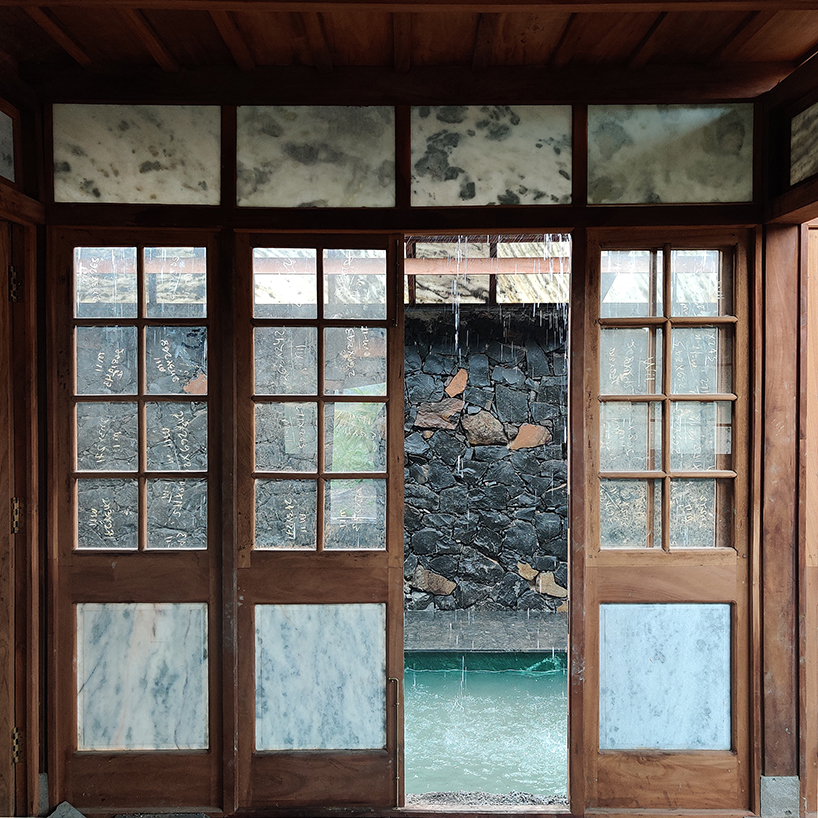
A glimpse of the water body and courtyard beyond the main space through reclaimed wooden doors.
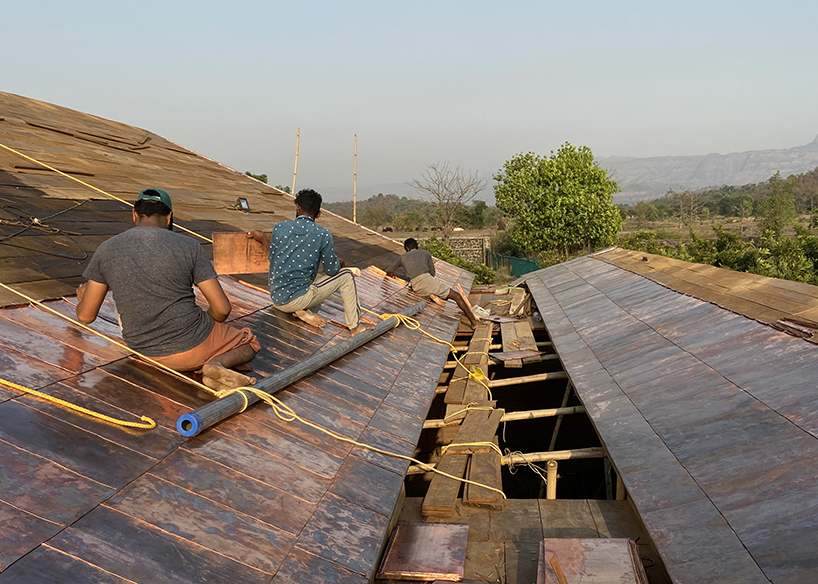
Copper Roofing work in progress on the main and courtyard end roof.
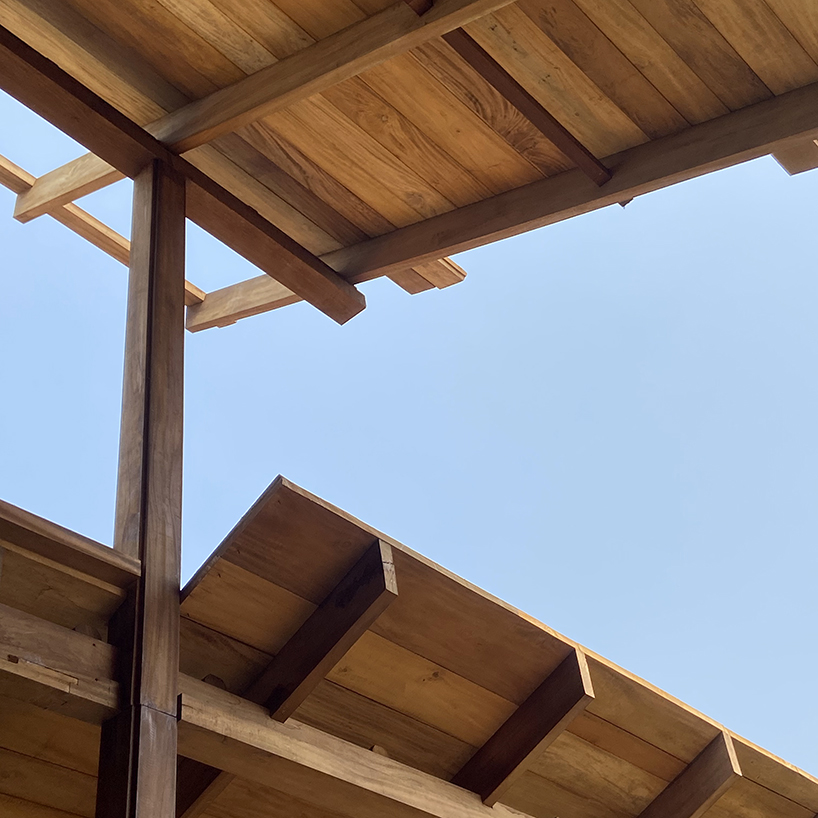
Timber Construction and Joinery
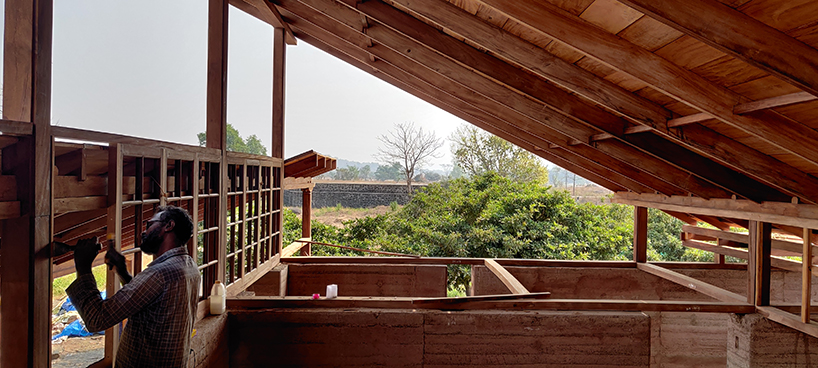
The central roof lifts creating a beautiful volume of space filled with light. Reclaimed Doors and windows being fitted.
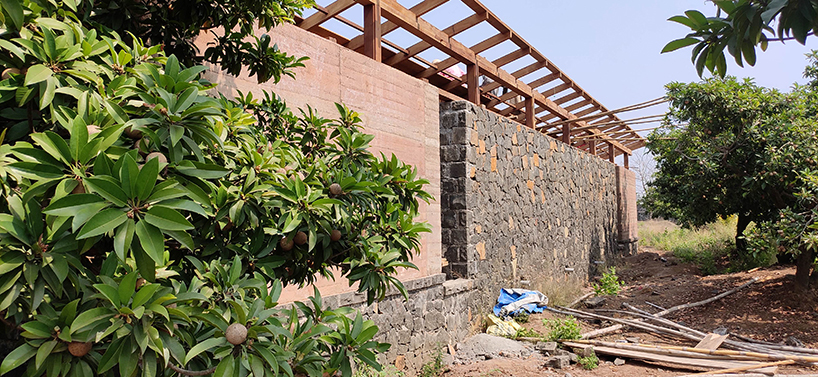
Material Assemblage of local materials like earth, stone and timber; giving rise to the architectural form.
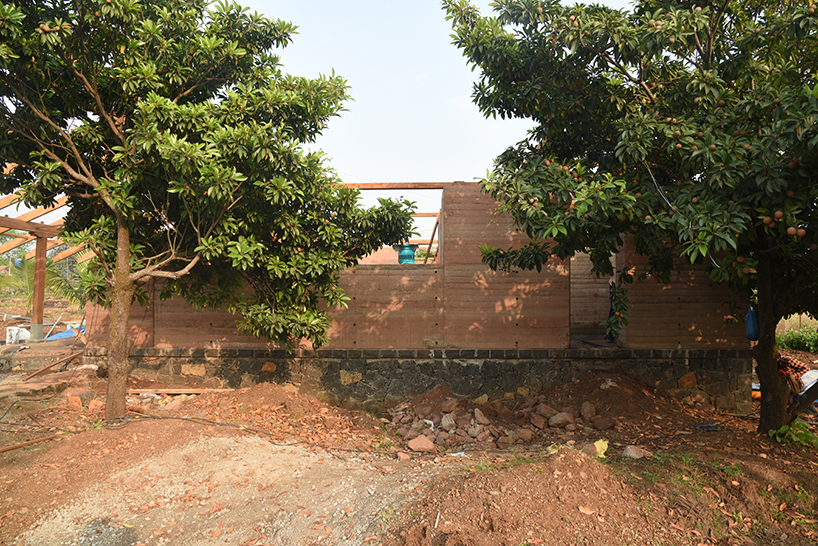
Soil excavated from the foundation work, stabilized and rammed in layers o build a thermal mass of walls for the private room enclosures.
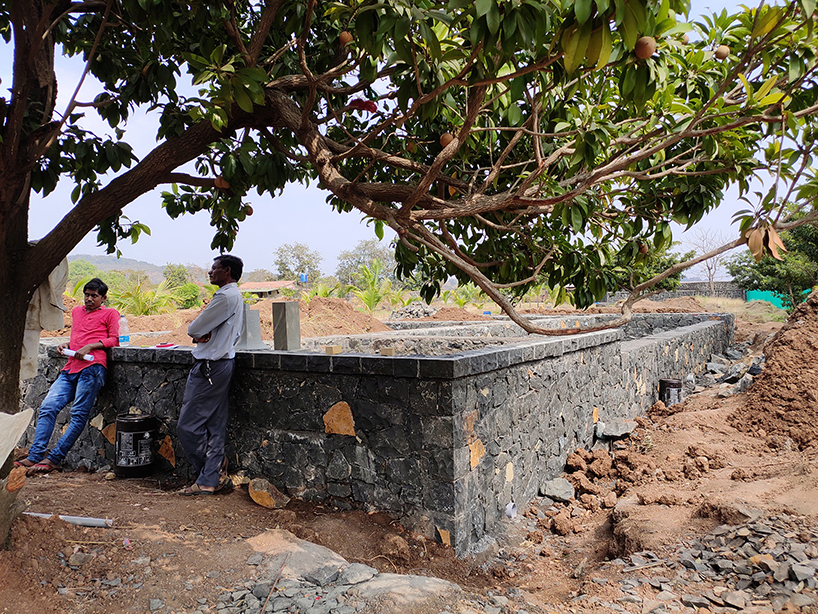
Basalt Stone which is local to this Deccan Trap region is used for the foundation and plinth construction.
project info:
name: Farmhouse at Pali
architect: Metis Practice | @metis.practice
location: Pali, District Raigad, Maharashtra, India
site area: 7 acres
built area: 2810 sqft
design team: Vrinda Seksaria, Santosh Thorat, Niti Gourisaria, Vishwa Undaviya, Nikita Mendonca, Hiren Patel, Jahnvi Patil, Ashmita Gupta
structural consultants: Suhas Chande, Mumbai
basalt stone work: Vidya Construction – Santosh Thosar & team, Pune
rammed earth walls: PYHT – Shahveer, Junaid & team, West Bengal
woodwork: Suthragrahyam – Vasantha Kumar & team, Kerala
copper roofing: Suthragrahyam – Vasantha Kumar & team, Kerala
electrical engineer: Ramesh Pimple & team, Mumbai
plumbing: Phoolchand Jadav & team, Mumbai
interior flooring & stone work: Girdharilal & Team, Rajasthan
photographers: Vrinda Seksaria, Santosh Thorat, Nikita Mendonca
designboom has received this project from our DIY submissions feature, where we welcome our readers to submit their own work for publication. see more project submissions from our readers here.
edited by: christina vergopoulou | designboom